
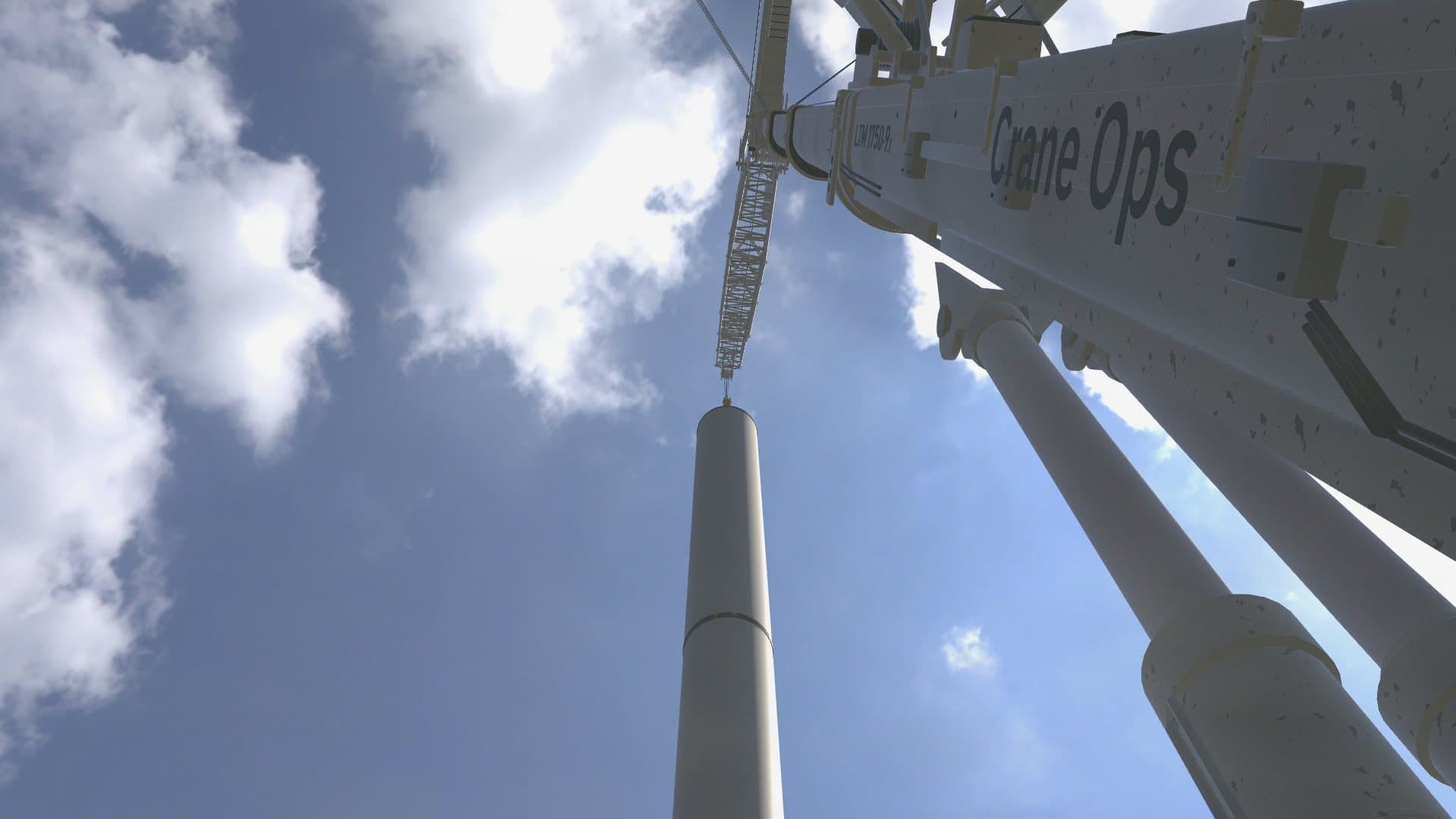
What it simulates
The crane, the rope, the load and the weather, all working against each other the way they do on a real job.
Real load charts, and a limiter
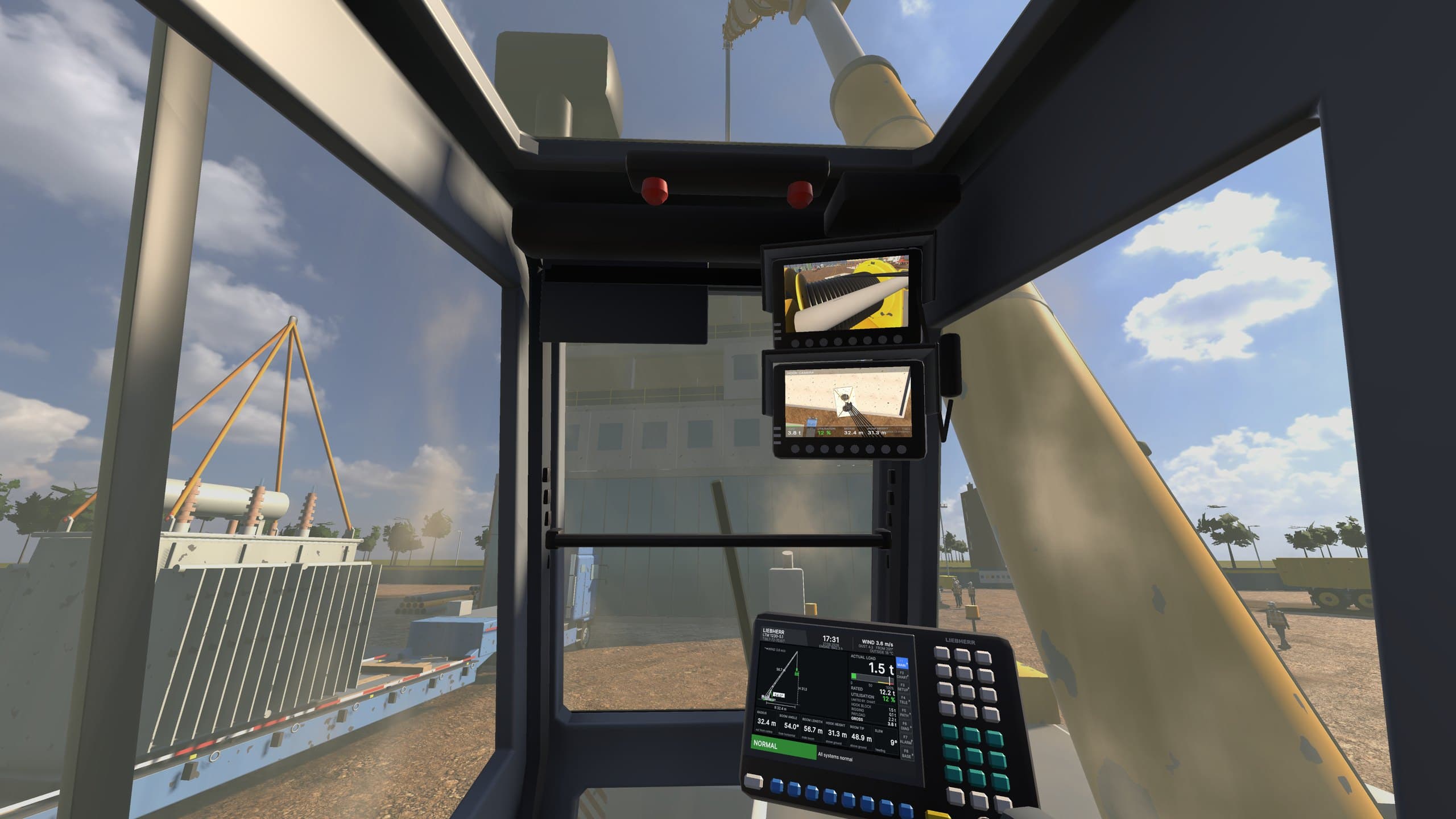
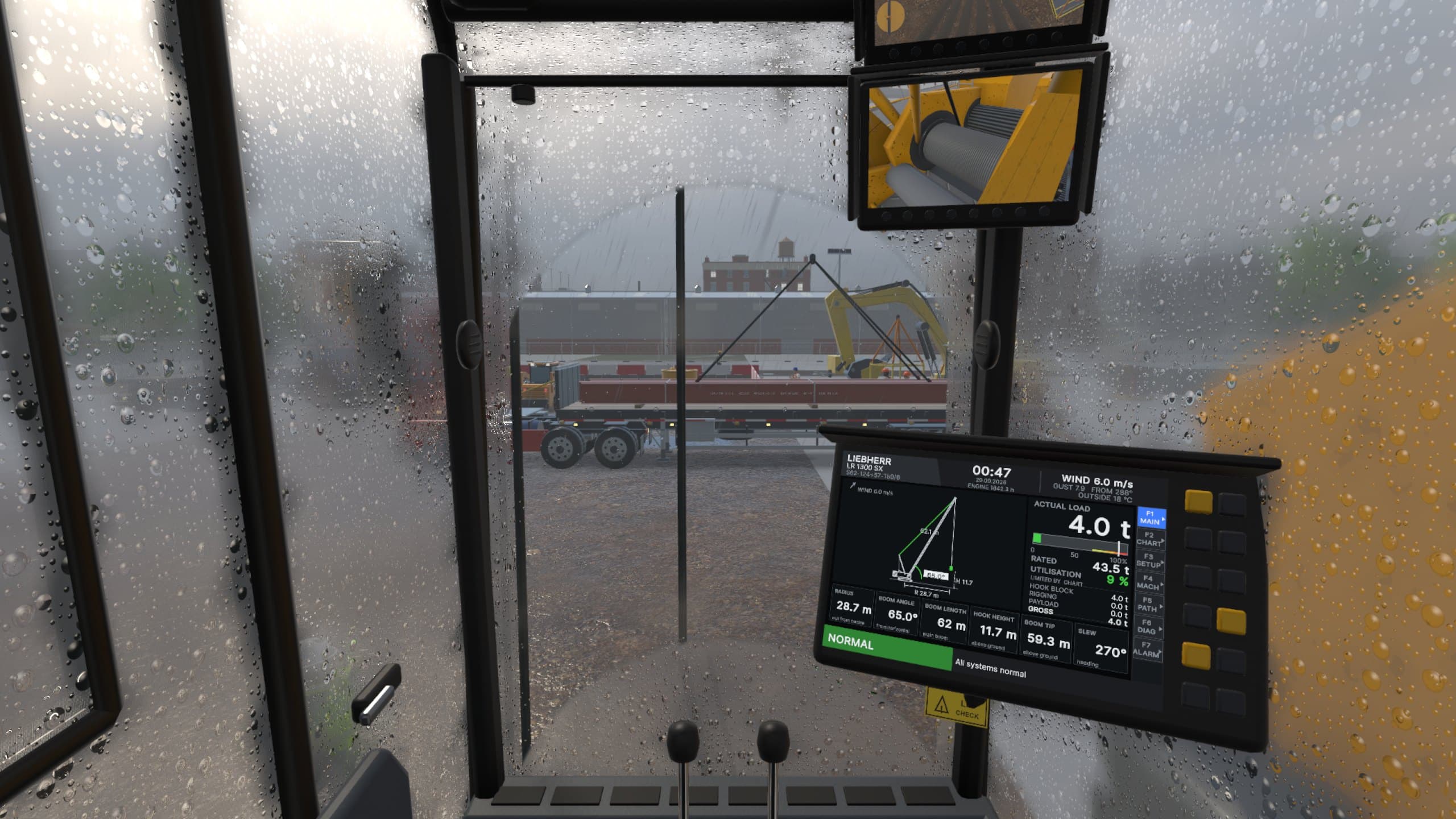
Every crane is built from its real data sheet: boom lengths, line speeds, outrigger spreads, and a load chart for each configuration. The cab screen shows how much of the chart you're using, and the limiter cuts the motion out where a real one would.
Before a job, the lift planner checks the chart, the reach, the ground bearing, the wind and the clearance along the slew.
Rope, rigging and wind
The hoist rope stretches under load and goes slack when you set down. Slings take up one leg at a time, spreader bars sit in the rigging as real stiff bars, and the load hangs from all of it.
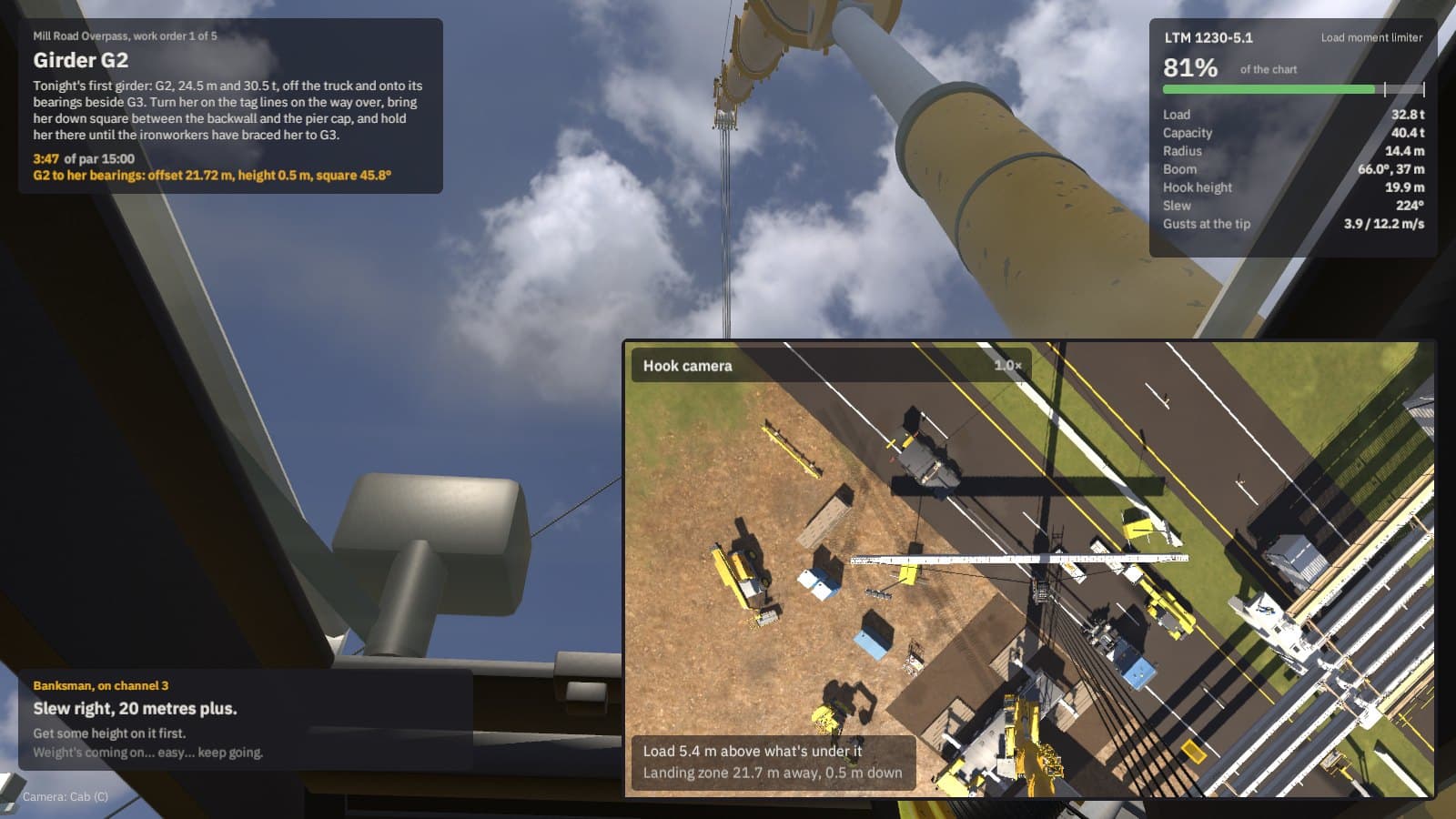
Wind comes in gusts and turns a load on whichever face it shows. The tagline crew can hold it up to a point. Each load has its own wind limit, and past it the supervisor calls a hold.
Set-up and counterweight by truck
Outriggers out on mats, level it, lock the suspension. The big cranes get their counterweight from a support truck and lift every slab onto their own deck. Raise the Y-guy, pin on a luffing jib, reeve the hook block for the day's heaviest pick.
From the seat
Every crane has its own cab with working screens. Hook cameras you can resize and zoom, leaning out to see past the pillar, two-joystick support laid out like a real cab, and rain that beads on the glass until the wipers clear it.
Choose Realistic physics, or Assisted while you learn.
Scenarios, not challenges
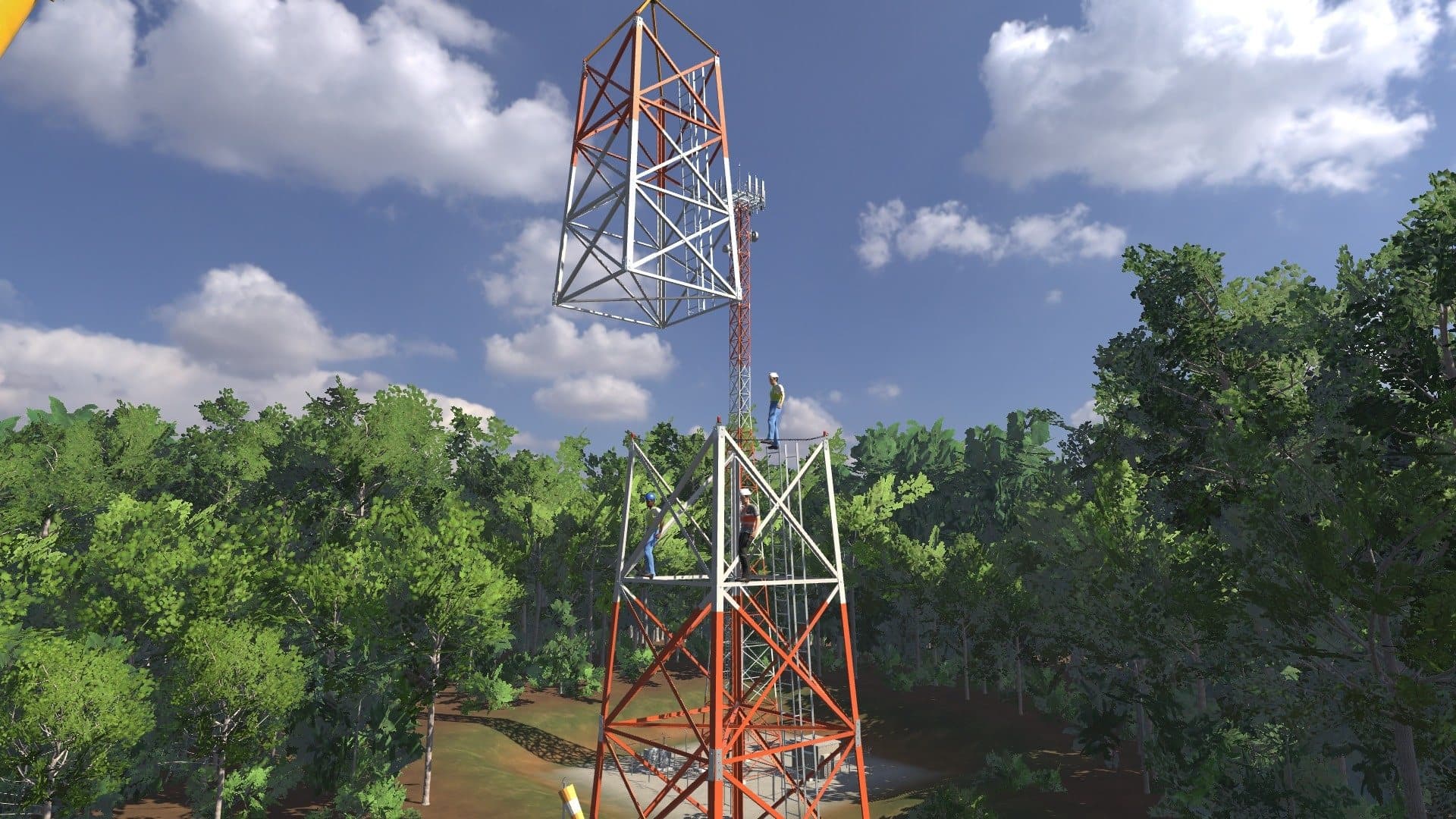
Long jobs that save after every lift: a whole wind turbine, a tower crane put up off the trucks, another taken down off a roof, a cell tower in sixteen picks. Tandem lifts, blind lifts with only the banksman, barge lifts, removals and the crew basket.
Get it wrong and you don't lose a life, you get a lift report.
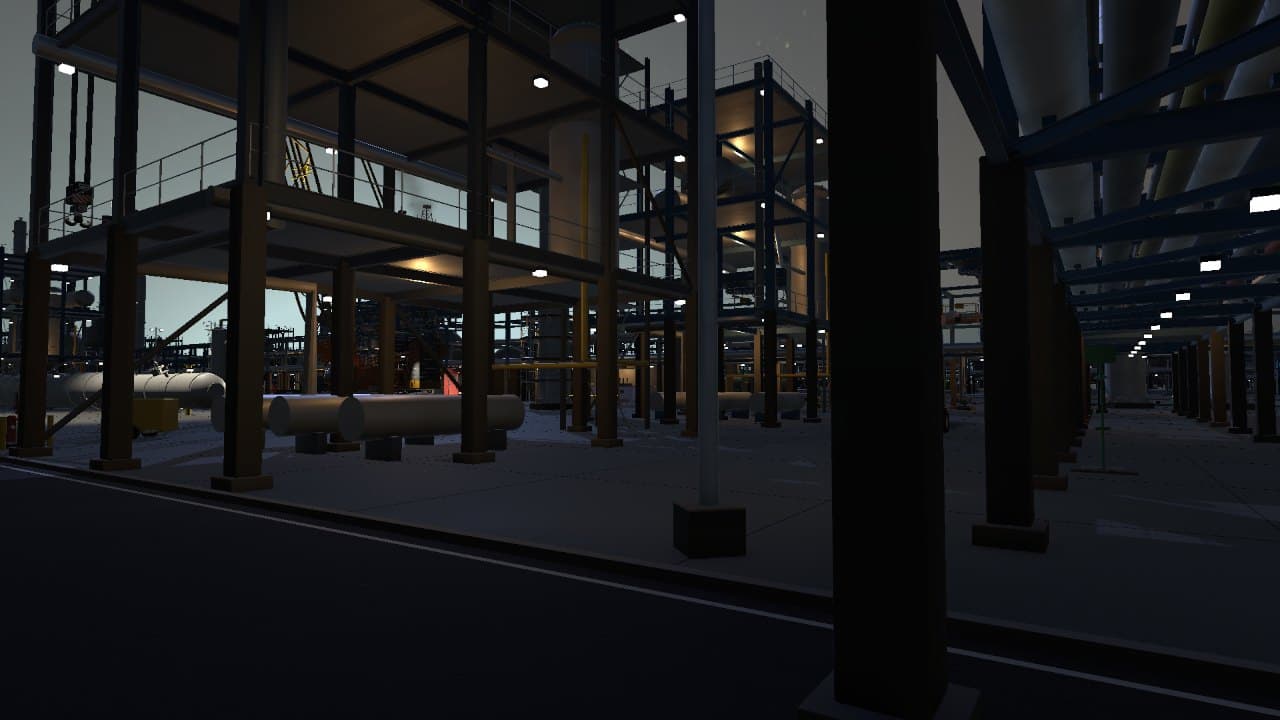
Weather and night
Squalls, fog and showers roll in during a job. Puddles fill, lightning stops work, and some jobs only happen at night, under work lights with the traffic still running.
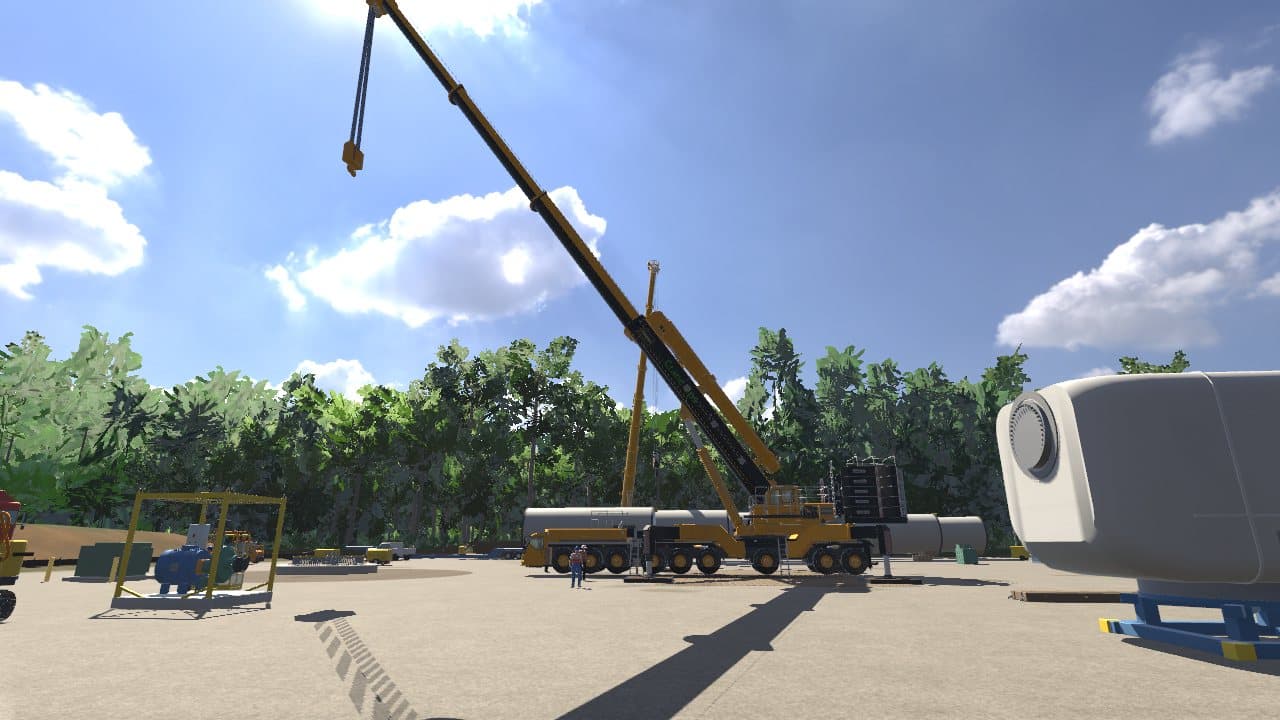
Your company colours
The paint shop does every crane. Start from a fleet livery, then change the body, boom, counterweight and cab colours, add stripes, a logo (built-in or your own image) and your company name.
Training
Never sat in a crane? Start with a first lift that takes about five minutes, then work through the course.
- First lift (about five minutes)
- The load chart
- Swing and sway control
- Turning the load on its taglines
- Blind lift
- Man basket
- Driving a mobile crane
- Setting up on outriggers
- Telescoping
- Working in wind
- The whole job
Career
Run your own crane company: contracts, lift plans, sign-offs and invoices, a fleet to hire or buy. It's being rebuilt around one open region where you drive your crane to every job.
See the roadmap